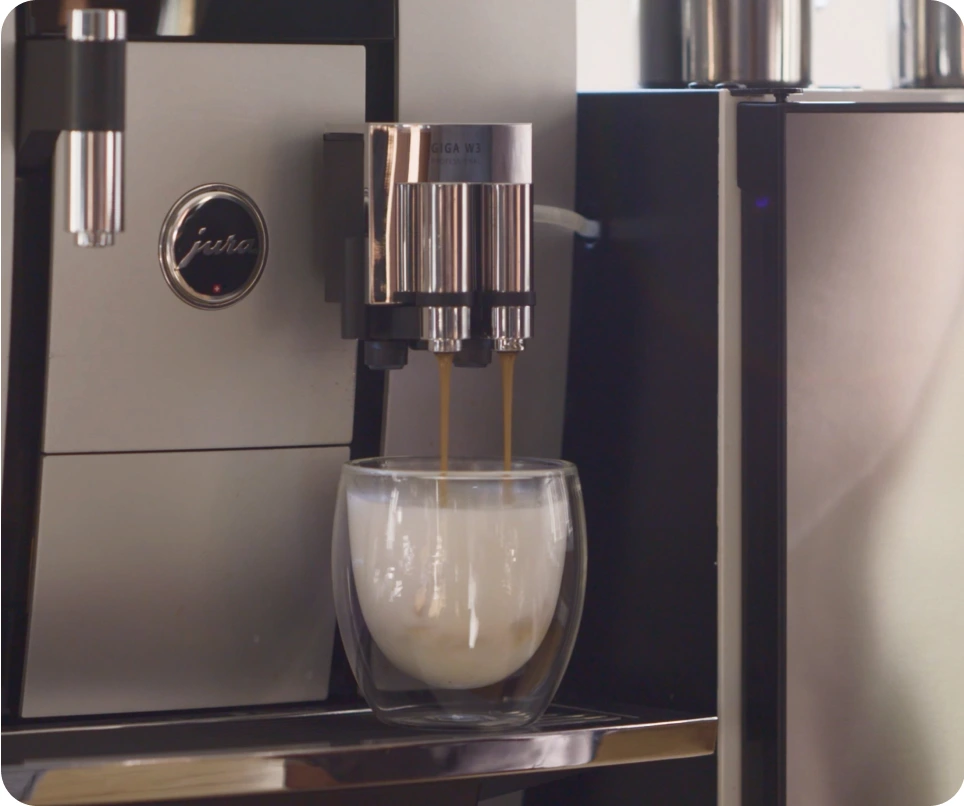
Large Long Island office campuses often have a central building that receives most of the amenities.
The cafeteria is there. The largest conference rooms are there. Visitors usually arrive there. It feels natural to put the best coffee there too.
Employees may spend most of their day somewhere else.
Our Long Island program specifically speaks to Nassau and Suffolk corporate campuses, including the practical cost of employees leaving the workplace for coffee. On a multi-building property, forcing every employee to cross the campus for a good cup can create a smaller version of the same problem.
Recent local notes cover Melville visitor cups versus badged desk counts and Hauppauge industrial dock morning restock windows.
Map employees by building, not company total
Start with ordinary attendance.
How many people actually work in each building on a normal Tuesday or Wednesday?
Which teams move between buildings?
Which locations receive visitors?
Does one building have a large cafeteria while another contains the company’s biggest employee population?
Those answers are more useful than a campus-wide headcount when deciding where coffee belongs.
Start with the break room readiness quiz when facilities and HR want a shared score before a multi-building pilot. The two week trial FAQ explains what week one and week two should each document.
A central station can still be useful
The goal is not putting a machine everywhere.
A central station works when employees naturally pass through that space.
If the cafeteria is genuinely the daily gathering point, it may carry most of the demand.
The problem appears when the central location is central only on the property map.
Our recent Long Island archive already shows how Melville visitor traffic and compressed commuter arrivals can make cup demand diverge from simple desk counts. A multi-building campus adds another layer. Local field notes give Nassau and Suffolk context for those campus layouts.
Use a trial to see who crosses buildings
During the free two-week pilot, note which employees use the machine.
Are people walking from another building?
Do they come only around lunch because the cafeteria is inconvenient earlier?
Does one group rarely use it at all?
The answers can guide whether the permanent program needs another station closer to that population.
Keep service practical
Each additional station also creates another location that needs supplies and service.
We provide concierge visits and adjust frequency based on usage rather than asking internal staff to maintain equipment. Details live on the Long Island about page.
That makes distributed stations possible, but they should still earn their place through actual use.
A rarely used satellite machine is not automatically better employee service.
The permanent setup should balance convenience with measured adoption. More reading is on the Long Island blog.
Our Long Island team can be reached at 866-977-3776 or admin@breakcoffeeco.com. Use the Request a trial form on the Long Island overview and map which buildings should be measured separately in week one.